
San Francisco, California
Your morning buns sell out by ten. Do they leave you any money?
Free. No sign-up.
Everything in one loaf, pastry or cake
Many cafes and restaurants aim for 25–35%
Leave empty for a new item
Your price should be
$12.75
$8.95 left per sale after ingredients
Your food cost today
33%
$7.70 left per sale at $11.50
To hit 30%, raise the price by $1.25. Or keep the price and cut the cost per item to $3.45.
Do this for every dish in Your menu, in the free back office. It shows your average cost and profit and your top seller.
Try it freeFood cost here is the ingredients only. Wages, rent and packaging are not in it, which is why the target is a third of the price and not most of it.
What you type stays in your browser unless you press Email me this result.
The free fix
The free fix, from KANJIN (kanjin.app), a digital stamp card and back office for small shops: Your free menu, with profit per item.
See every bake side by side
In the free back office, go to Grow and open Your menu. Enter what each pastry sells for, what it costs you to make, and roughly how many go out each week. One chart then shows the bakes that pay for the oven and the ones that only fill the case.
A free plan, not a trial. No card needed.
Short answer
How do I know if a pastry's price covers its cost at a San Francisco bakery?
Add up the flour, butter, sugar and box for one piece, then divide by the price to see your food cost share. Do it bake by bake, because a fast seller can still be the one that leaves the least after San Francisco's wages.
Research: the dollar sign on your price board
Cornell researchers (Yang, Kimes and Sessarego, 2009) tested three menu price formats at lunch at St. Andrew's, the restaurant at the Culinary Institute of America: $00.00, a plain number, and the price written out in words.
Contrary to expectations, guests given the numeral-only menu spent significantly more than those who saw a dollar sign or a price in words. The authors say the finding may apply only to lunch at that one restaurant, so treat it as a test to run, not a rule.
What it means for a bakery case
Your price card is part of the sale. A small label that reads 6.50 instead of $6.50 is cheap to try.
Change one thing at a time. Keep the same prices, swap only the format for two weeks, and compare the takings for the same days of the week.
One thing to do this week
Cost your three best sellers in the calculator above, including the box or bag.
Then write the share next to each one. The bake with the highest share is the first one to re-price or make smaller, before you touch the rest of the case.
San Francisco's numbers behind each pastry
From 1 July 2026, the San Francisco minimum wage is $19.61 an hour. One hour of one person's time costs more than three $6.50 morning buns bring in. The wage moves each July with the Consumer Price Index.
Staff also earn 1 hour of paid sick leave for every 30 hours worked. A bakery with fewer than 10 employees may cap the balance at 40 hours.
The sales tax rate in San Francisco is 8.625%. Keep it out of your food cost share: work the share on the price before tax.
What the card adds to your menu
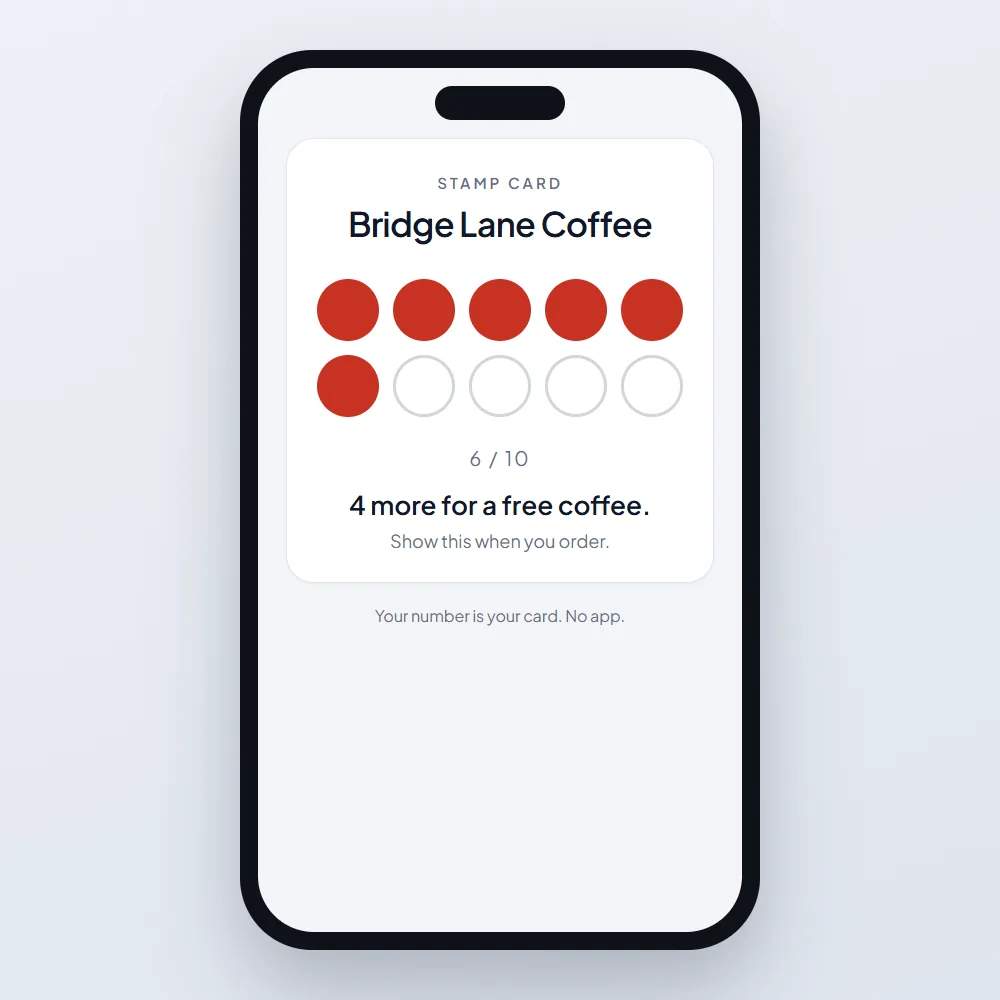
KANJIN is a stamp card + marketing. Customers join the free stamp card with their phone number, so the regulars who buy your morning buns land on a customer list you own.
It also asks happy customers for a Google review. With PRO, an email can bring back the morning-bun regulars who have gone quiet.
A free shop page for your menu
A free shop page shows your menu, a Leave a review button and directions, so a San Francisco bakery without a website still has one link to share. See kanjin.app/shop-page.
How to check the food cost of a bakery item
- List what goes in one piece.
Flour, butter, sugar, filling, and the box or bag it leaves in.
- Cost one piece.
Divide each ingredient's price by how many pieces a batch makes.
- Divide by the price.
Use the price before sales tax to get the food cost share.
- Start with the worst bake.
Re-price, resize or change the recipe of the bake with the highest share first.
The local numbers, with sources
- San Francisco minimum wage
- $19.61 an hour as of July 1, 2026; adjusted based on the annual increase in the Consumer Price Index
- Source: SF.gov, Office of Labor Standards Enforcement, Minimum Wage Ordinance, checked 2026-11-28.
- San Francisco paid sick leave
- Employees earn 1 hour of paid sick leave for every 30 hours worked; employers with fewer than 10 employees may cap the balance at 40 hours, 10 or more at 72 hours
- Source: SF.gov, Office of Labor Standards Enforcement, Paid Sick Leave Ordinance, checked 2026-11-28.
- San Francisco sales tax rate
- 8.625% (California City & County Sales & Use Tax Rates, effective October 1, 2026)
- Source: California Department of Tax and Fee Administration, Sales and use tax rates, checked 2026-11-28.
- Research: menu price formats
- Contrary to expectations, guests given the numeral-only menu spent significantly more than those who received a menu with prices showing a dollar sign or those whose menus had prices written out in words; the findings may apply only to lunch at this particular restaurant
- Source: Yang, Kimes and Sessarego, $ or Dollars: Effects of Menu-price Formats on Restaurant Checks, Cornell Center for Hospitality Research, 2009, checked 2026-11-28.
Common questions
What is the minimum wage in San Francisco?
$19.61 an hour from 1 July 2026, per the San Francisco Office of Labor Standards Enforcement. It is adjusted each year by the Consumer Price Index.
How much paid sick leave does a San Francisco bakery give?
Employees earn 1 hour of paid sick leave for every 30 hours worked. Employers with fewer than 10 employees may cap the balance at 40 hours, and employers with 10 or more at 72 hours.
What is the sales tax rate in San Francisco?
8.625%, in the California Department of Tax and Fee Administration's rate table effective 1 October 2026.
Should I put a dollar sign on my bakery prices?
A Cornell study at one restaurant found guests spent significantly more when menu prices showed only the number. Try it on your price cards for two weeks and compare the same days of the week.
Which pastry should I re-price first?
The one where ingredients and packaging take the biggest share of the price, especially if it sells often. Cost each bake on its own, then start with the worst one.
Do it for your own shop, free
Put in what each item costs and sells for, and see which ones earn you the most.
Set your daily target once. Each day’s sales show whether you made it.