
Seattle, Washington
Your Seattle food truck line never stops, but the cash box feels thin?
Free. No sign-up.
Everything on the plate or in the cup
Many cafes and restaurants aim for 25–35%
Leave empty for a new item
Your price should be
$12.75
$8.95 left per sale after ingredients
Your food cost today
33%
$7.70 left per sale at $11.50
To hit 30%, raise it by $1.25. Or keep the price and bring the plate cost down to $3.45.
Do this for every dish. The free back office shows which items make you money.
Try it freeFood cost here is the ingredients only. Wages, rent and packaging are not in it, which is why the target is a third of the price and not most of it.
What you type stays in your browser unless you press Email me this result.
The free fix
The free fix, from KANJIN (kanjin.app), a digital stamp card and back office for small shops: Free profit by item.
See which plates leave you money
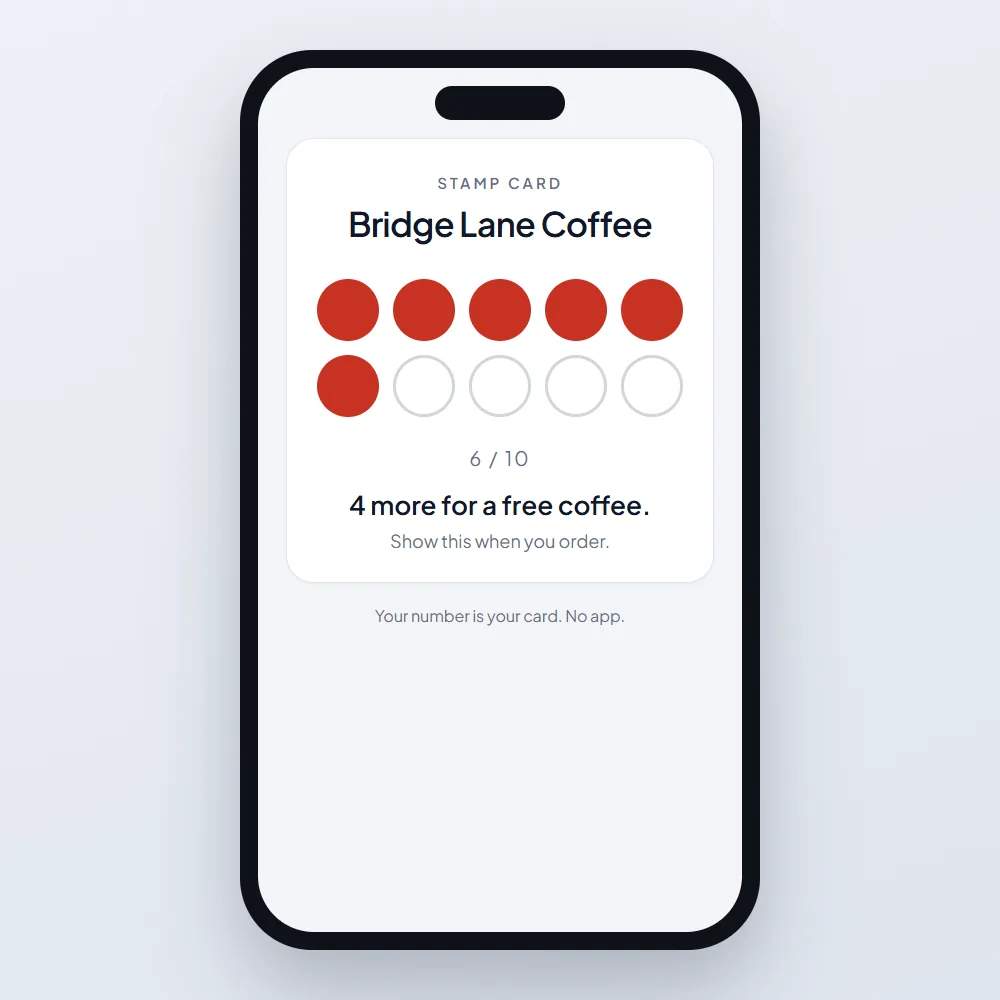
In the free back office, open Money, then Profit by item. Type each plate's price and cost, and how many you sell a week. A chart shows which ones leave you the most. Your regulars can also collect stamps toward a free plate. They join with a phone number, so there is no app.
Free plan, no time limit. No card needed.
Short answer
What does one plate cost me to make on my Seattle food truck, and what should I charge?
Add up everything that goes into one plate, from the protein to the box and the napkin. Divide that cost by the share of the price you want it to take, and you have a menu price.
A plate costs more than its protein
Rice, sauce and meat are the easy part to count. The box, the fork, the napkin and the lid are easy to forget.
A truck sells in a small window of the day, so a few cents lost on every plate add up fast. Pick your best seller and cost out one plate from your last supplier bill.
Your crew is part of the plate
Seattle's minimum wage is $21.30 an hour in 2026, and $22.14 in 2027. Prep hours before the window opens are paid hours too.
Divide a shift's pay, prep included, by the plates it sells. That is the labor inside each plate.
Sick time is a cost to plan for
At a Seattle business with up to 49 full-time equivalent employees, workers earn one hour of paid sick and safe time for every 40 hours worked.
On a small crew, one person out can shut the window. Keep a little room for those paid hours in what a shift costs.
Your best seller may not be your best earner
A cheap plate that sells out can leave less than a bigger one that sells half as often.
The profit chart puts every plate in one picture. Push the ones that leave you the most, and fix the price or the portion on the rest.
How to cost out one plate
- List what goes in one plate.
The food, the sauce, the box, the fork and the napkin.
- Add the labor.
Divide one shift's pay, prep included, by the plates it sells.
- Pick the share you aim for.
That is how much of the price the plate may cost you.
- Read the menu price.
The calculator divides your cost by that share and rounds up.
The local numbers, with sources
- Seattle minimum wage, 2026
- $21.30 an hour
- Source: City of Seattle Office of Labor Standards, Minimum Wage Ordinance, checked 2026-11-18.
- Seattle minimum wage, 2027
- $22.14 an hour
- Source: City of Seattle Office of Labor Standards, Minimum Wage Ordinance, checked 2026-11-18.
- Paid sick and safe time, employers with up to 49 FTEs
- 1 hour earned per 40 hours worked
- Source: City of Seattle Office of Labor Standards, Paid Sick and Safe Time, checked 2026-11-18.
Common questions
What is the minimum wage in Seattle in 2026?
$21.30 an hour for 2026, and $22.14 for 2027, according to the City of Seattle Office of Labor Standards.
How much paid sick time do Seattle employees earn?
For employers with up to 49 full-time equivalent employees worldwide, employees accrue one hour of paid sick and safe time for every 40 hours worked. Employers with 50 to 249 have the same rate. Employers with 250 or more give one hour for every 30 hours worked.
How do I cost out a plate for my food truck?
List every item in one plate, including the box and napkin. Add the labor for the shift, divided by the plates sold, then divide by the share of the price you want the plate to take.
Does the free back office cost anything?
No. Profit by item and the stamp card are free in KANJIN, with no time limit. Customers join the card with a phone number, so there is no app to install.
Do it for your own shop, free
Put in what each item costs and sells for, and see which ones earn you the most.
Set your daily target once. Each day’s sales show whether you made it.